The Reasoning That Gets Parents Into Trouble
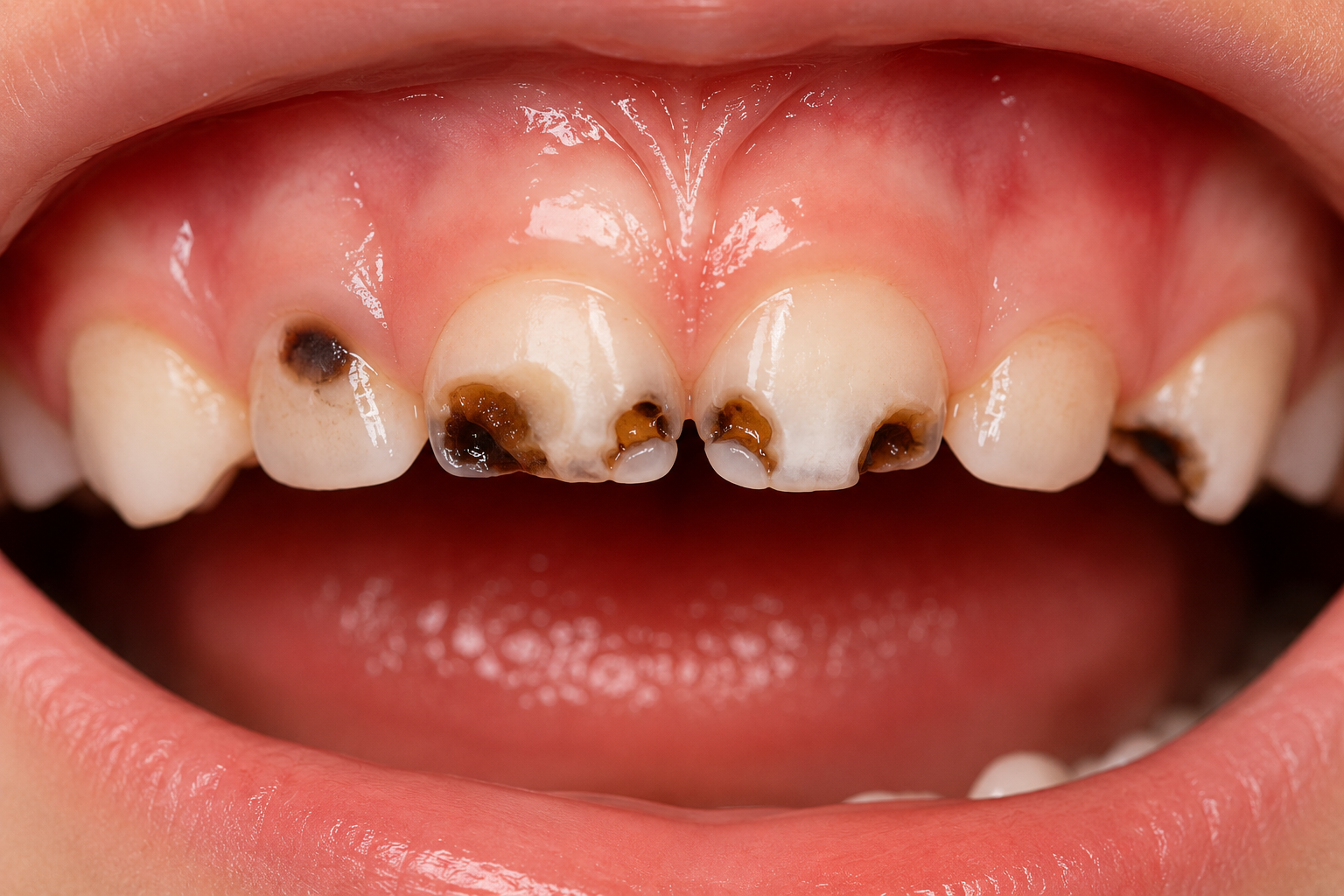
The most common reason parents delay treating a cavity in a baby tooth is simple: the tooth is going to fall out anyway. The logic seems sound, but it misses something important. Cavities do not wait patiently for a tooth to exfoliate. They grow. They infect. And the damage they cause extends well beyond the tooth itself. What starts as a minor cavity in a two-year-old can become an abscess, an extraction, and a series of orthodontic problems before that child reaches kindergarten.
Why Baby Tooth Decay Always Gets Worse Without Treatment
Dental decay is caused by bacteria that feed on sugar and produce acid as a byproduct. That acid erodes enamel and then dentin continuously, with no natural stopping point. Unlike a cold that resolves on its own, a cavity only progresses until it is treated.
Families in Lehi, Utah are sometimes surprised to learn that an untreated baby tooth infection can affect the permanent tooth developing directly beneath it. Baby tooth roots sit very close to the crowns of incoming permanent teeth. A chronic infection at that root can cause discoloration, structural abnormalities, or delays in the permanent tooth's development before it even erupts.
How Decay Progresses When Left Untreated
The following progression reflects what typically happens when a cavity in a baby tooth goes without treatment. Each stage is more involved to address than the one before it.
Stage 1: Early Enamel Decay
A small cavity forms in the outer enamel layer. The tooth may show white spots or a faint darkening. At this stage, treatment is a simple filling completed in a single short appointment with no anesthesia in many cases.
Stage 2: Dentin Involvement
Decay reaches the softer dentin layer beneath the enamel and spreads more quickly. The tooth may become sensitive to cold, heat, or sweet foods. A filling is still possible but requires more removal of tooth structure.
Stage 3: Pulp Exposure
Decay reaches the inner pulp where the nerve lives. The child may experience intermittent toothache, especially at night. A pulpotomy — the pediatric equivalent of a root canal — may still save the tooth, but the procedure is more involved and a crown is typically required afterward.
Stage 4: Abscess Formation
The infection spreads beyond the tooth root into surrounding gum and bone tissue. Swelling becomes visible. The child may develop a fever. Emergency dental treatment is required.
Stage 5: Tooth Loss and Downstream Consequences
If the infection cannot be resolved, extraction becomes necessary. This triggers a new set of concerns: neighboring teeth begin to shift into the gap, the permanent tooth loses its pathway, and orthodontic intervention often follows.
How This Affects Children's Daily Lives in Lehi, Utah
Dental pain changes how children behave, sleep, and function at school. Parents in Lehi, Utah sometimes do not recognize dental discomfort as the cause of a child's irritability, loss of appetite, or trouble sleeping, because young children cannot always articulate where the pain is coming from. Favoring one side of the mouth when chewing, avoiding certain foods, or touching their cheek repeatedly can all be quiet indicators of a tooth problem.
In rare but documented cases, dental abscesses in children have spread to the jaw, face, and neck, creating medical emergencies that require hospitalization. While these outcomes are not common, they underscore why untreated dental infections in children are taken seriously in Lehi, Utah and everywhere else.
The Financial Reality of Waiting
Treating a cavity early costs a fraction of what treatment costs once the decay has advanced. The table below illustrates how expenses escalate at each stage.