Pediatric Dentist vs. Family Dentist: Which Is Better?

August 27, 2026
Dentist showing dental chart to two smiling patients in a bright clinic

Why This Decision Matters More Than Most Parents Realize

Both pediatric dentists and family dentists can see children. Both went to dental school, passed licensing exams, and treat patients daily. So for many families in Utah, choosing between them feels like a minor administrative detail. In practice, the differences in training, clinical environment, and the scope of services available can have a real impact on your child's experience, their comfort over time, and the complexity of care the provider can offer when something goes wrong.


What Each Type of Provider Is Trained to Do

The most meaningful difference between these two providers starts before they ever see a patient.


Pediatric Dentists

After completing dental school, pediatric dentists complete an additional two to three years of specialty residency training focused entirely on infants, children, and adolescents. This residency covers child psychology and communication, behavior management techniques, growth and development of the jaw and teeth, treatment of children with special health care needs, sedation and hospital dentistry, and managing dental trauma. Board certification requires passing both written and clinical examinations that validate specialty-level competency.

Family Dentists

Family dentists, also called general dentists, complete dental school and enter practice serving patients of all ages. Their curriculum covers the full range of adult dentistry with general exposure to pediatric patients but does not include the same depth of child-specific training. Many family dentists are genuinely skilled with children and manage routine pediatric care effectively. What varies is their depth of training in behavior management, developmental monitoring, and complex pediatric procedures.


Side-by-Side: Key Differences at a Glance

The table below compares the two provider types across the factors that matter most for families deciding where to take their child.

Factor Pediatric Dentist Family Dentist
Post-graduate specialty training 2–3 years, child-focused None beyond dental school
Patient age focus Infants through teens All ages
Office environment Designed for children Designed for adults, may have child features
Behavior management training Extensive, specialty-level Basic, varies by provider
Sedation range Nitrous, oral, IV, hospital anesthesia Usually limited to nitrous oxide
Special needs experience Extensive residency training Varies significantly by provider
Developmental monitoring Deep expertise in eruption and jaw growth General knowledge

What Families in Lehi, Utah Tend to Find

Many families in Lehi, Utah start with a family dentist and transition to a pediatric specialist when a specific challenge arises. A child who develops significant dental anxiety, a child diagnosed with autism or sensory sensitivities, or a treatment plan that exceeds what the family dentist is comfortable handling are all common reasons families make the switch.


Others choose a pediatric specialist from the first visit and stay through adolescence. These families often cite the child-centered office environment, the staff's comfort with young patients, and the broader range of sedation options as reasons they would not go back to a general practice for their children.


When a Pediatric Specialist Is Strongly Recommended

For routine preventive care in a healthy, cooperative older child, either provider type can be appropriate. A pediatric dental specialist becomes particularly important in the following situations.

  • The child is an infant or toddler attending their first dental visit
  • The child has significant dental anxiety or a history of traumatic dental experiences
  • The child has been diagnosed with autism spectrum disorder, sensory processing differences, or other developmental considerations
  • The treatment plan involves multiple procedures or requires sedation beyond nitrous oxide
  • The child has experienced dental trauma such as a knocked-out, fractured, or displaced tooth
  • There are early signs of bite or spacing concerns that benefit from specialist-level developmental monitoring


Can My Child See Both Types of Providers?

There is no requirement to choose exclusively. Some families use a family dentist for routine cleanings and refer to a pediatric specialist for complex work, sedation procedures, or developmental evaluations. When both providers communicate effectively and share records, continuity of care is maintained.


If you are uncertain which provider is right for your child in Lehi, Utah, scheduling an initial consultation with a pediatric dental specialist is a low-commitment way to get clarity. The visit allows the provider to assess your child's specific needs and make recommendations, with no obligation to transfer care permanently.

Frequently Asked Questions

  • Up to what age does a pediatric dentist typically treat patients?

    Most pediatric dentists see patients through age 18. Some continue treating patients with special health care needs into adulthood when ongoing specialty care is warranted. The transition to an adult provider is usually discussed as the patient approaches the end of high school.

  • Is a pediatric dentist more expensive than a family dentist?

    Not necessarily. Fee structures for routine preventive and basic restorative services are often comparable. Specialty procedures or sedation options that are not available at family practices carry additional fees, but these would be costs regardless of where the work was done.

  • What if my child is very anxious at the dentist? Does the provider type matter?

    Significantly. Pediatric dentists receive specific training in behavior management and child communication. The office design, the language the team uses, and the way appointments are paced are all calibrated to reduce anxiety in young patients. This training and environment can make a meaningful difference for children who have struggled in adult dental settings.

  • Can a family dentist perform a pulpotomy or place a pediatric crown?

    Some family dentists perform these procedures regularly and do so competently. Pediatric specialists, however, perform them as a core part of daily practice, which typically means greater experience with child-specific materials, techniques, and behavioral considerations.

  • What does the American Academy of Pediatric Dentistry recommend for a child's first visit?

    The AAPD recommends that every child's first dental visit occur by age one or within six months of the first tooth erupting. A pediatric dentist is specifically trained for this early developmental window, including assessing infant oral health, discussing feeding habits, and guiding parents through the teething period.

Conclusion

For many families, a pediatric dentist offers a level of specialization, environment, and clinical breadth that a general practice simply cannot replicate for young patients. Lehi Pediatric Dentistry in Lehi, Utah is a pediatric specialty practice dedicated entirely to infants, children, and teens, built from the ground up around the needs of growing smiles. Call to schedule your child's visit and experience the difference a specialist practice makes.

Recent Posts

Dentist examining a child in a bright clinic, using tools while the child sits in a blue chair
September 4, 2026
Find out what dental sealants cost for children, how well they work, and whether insurance covers them in Utah.
Dentist discussing treatment with a smiling family in a bright dental clinic
August 6, 2026
Learn how dental insurance covers children's fillings, what affects your out-of-pocket cost, and options if uninsured.
Close-up of child’s teeth with severe brown cavities and black decay on front teeth
July 24, 2026
Learn how untreated cavities in baby teeth progress into infections, tooth loss, and permanent tooth damage.
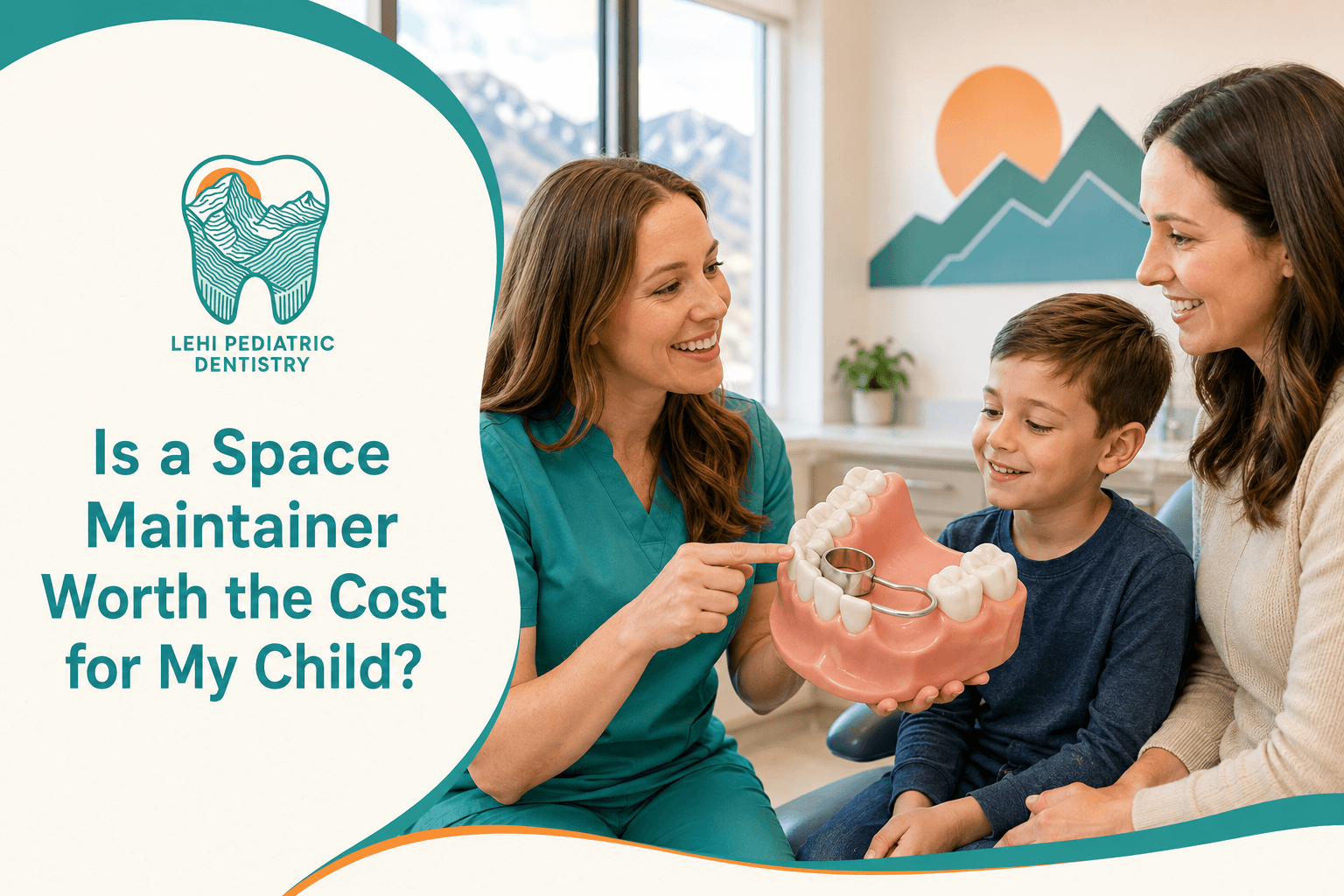
Dentist checking a smiling child’s teeth with dental braces shown in a close-up inset.
July 2, 2026
Find out what space maintainers cost, how they work, and why skipping one can lead to costly orthodontic problems.

Child in dental chair with mask; text reads “Pediatric Sedation Dentistry” and “How Much Does It Cost?”
June 29, 2026
Understand the costs of nitrous oxide, oral sedation, IV sedation, and hospital anesthesia for kids' dental care.
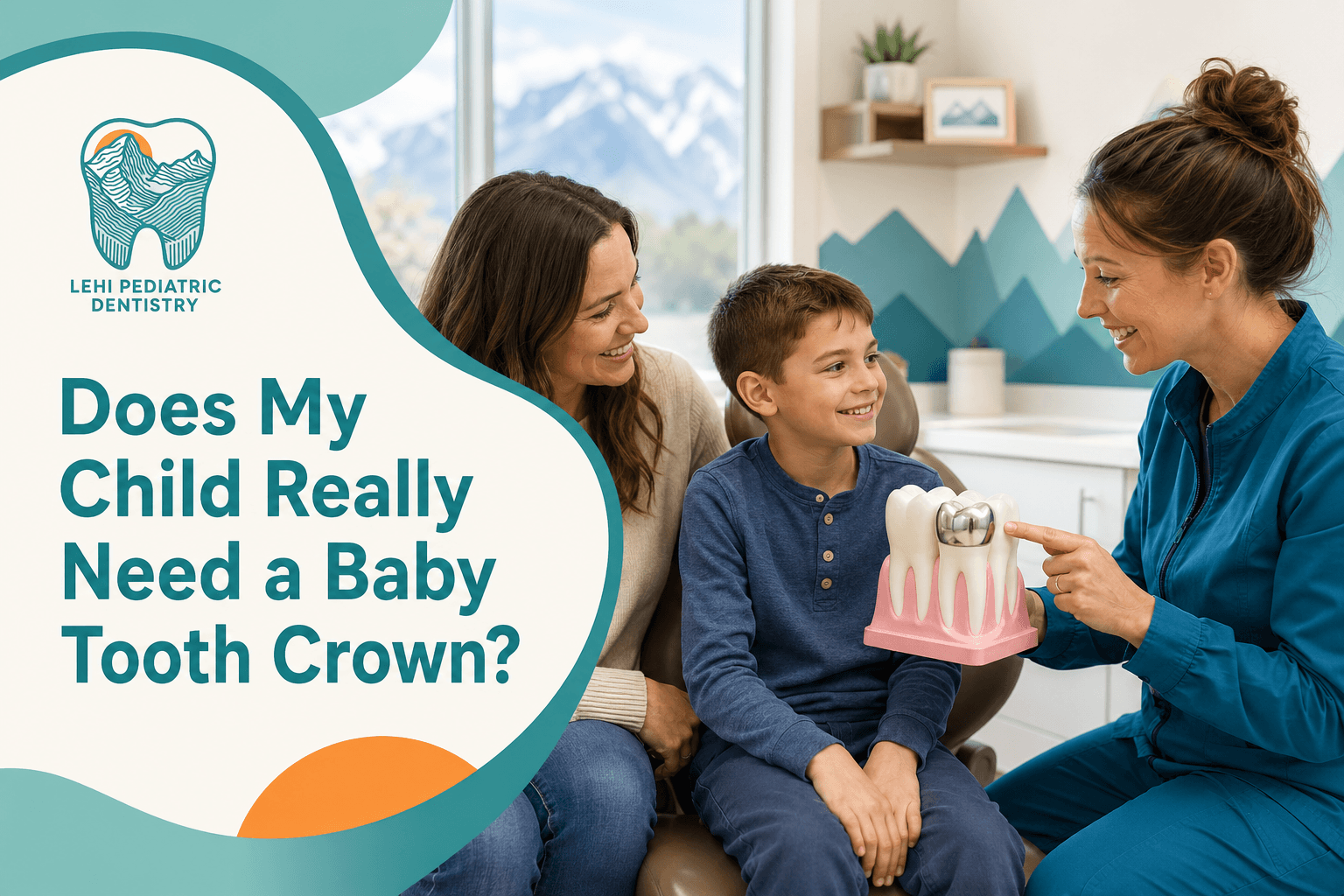
Infographic comparing a child with tooth pain and a child smiling beside a baby tooth crown.
June 16, 2026
Learn why pediatric dentists recommend crowns for baby teeth and what happens if the treatment is skipped.
January 16, 2026
Learn why pediatric dental emergencies cost more, what’s included, and what Lehi, Utah parents should expect in terms of pricing and care.
January 14, 2026
Find out what baby tooth extractions really cost, what affects the price, and what Lehi, Utah parents should know about sedation, insurance, and recovery.
January 12, 2026
Learn why white fillings cost more than silver ones for children, what affects pricing, and what Lehi, Utah parents should know about dental choices.

January 10, 2026
Learn how dental sealants protect children’s teeth, when they’re applied, and what parents in Lehi, Utah should know about their effectiveness.
Show More