Less Scary Than You Think
Many parents put off scheduling their
child's first dental visit because they do not know what to expect and assume the unknown will be stressful for everyone involved. In reality, a first dental visit for a young child is one of the most low-key appointments in a pediatric dental office. There is no drilling, rarely any discomfort, and often no tears. What there is, is a lot of looking, explaining, and talking through what parents can do at home. Understanding the structure of the visit removes the guesswork and helps both parent and child walk in calm.
When the First Visit Should Happen
The American Academy of Pediatric Dentistry recommends that every child's first dental visit occur by age one or within six months of the first tooth appearing, whichever comes first. This recommendation surprises most parents, who assume the first visit happens closer to age three or when a child has a full set of teeth.
The reasoning is practical. Early visits allow the dentist to monitor tooth development from the very beginning, identify individual risk factors for decay, and give parents guidance specific to their child's age and habits. In Lehi, Utah, families who come in early tend to catch small concerns before they grow and build a comfort level with the dental office before the child is old enough to feel anxious about it.
What to Expect When You Arrive
A pediatric dental office is designed with the experience of young patients in mind. The waiting room, the colors, the scale of the furniture, and the way the team speaks are all calibrated for children. When you arrive in Lehi, Utah for your child's first visit, the front desk team will handle paperwork, collect insurance information, and answer any initial questions.
Children are often given a few minutes to take in the waiting area and get comfortable before being called back. This brief window makes a meaningful difference for young children who need time to adjust to new environments before they are asked to cooperate with unfamiliar adults.
What the Dental Team Does During the Appointment
The first visit is structured around familiarity, evaluation, and parent education rather than treatment. The following is a step-by-step description of what happens from the moment your child is called back.
Step 1: Introduction and Orientation
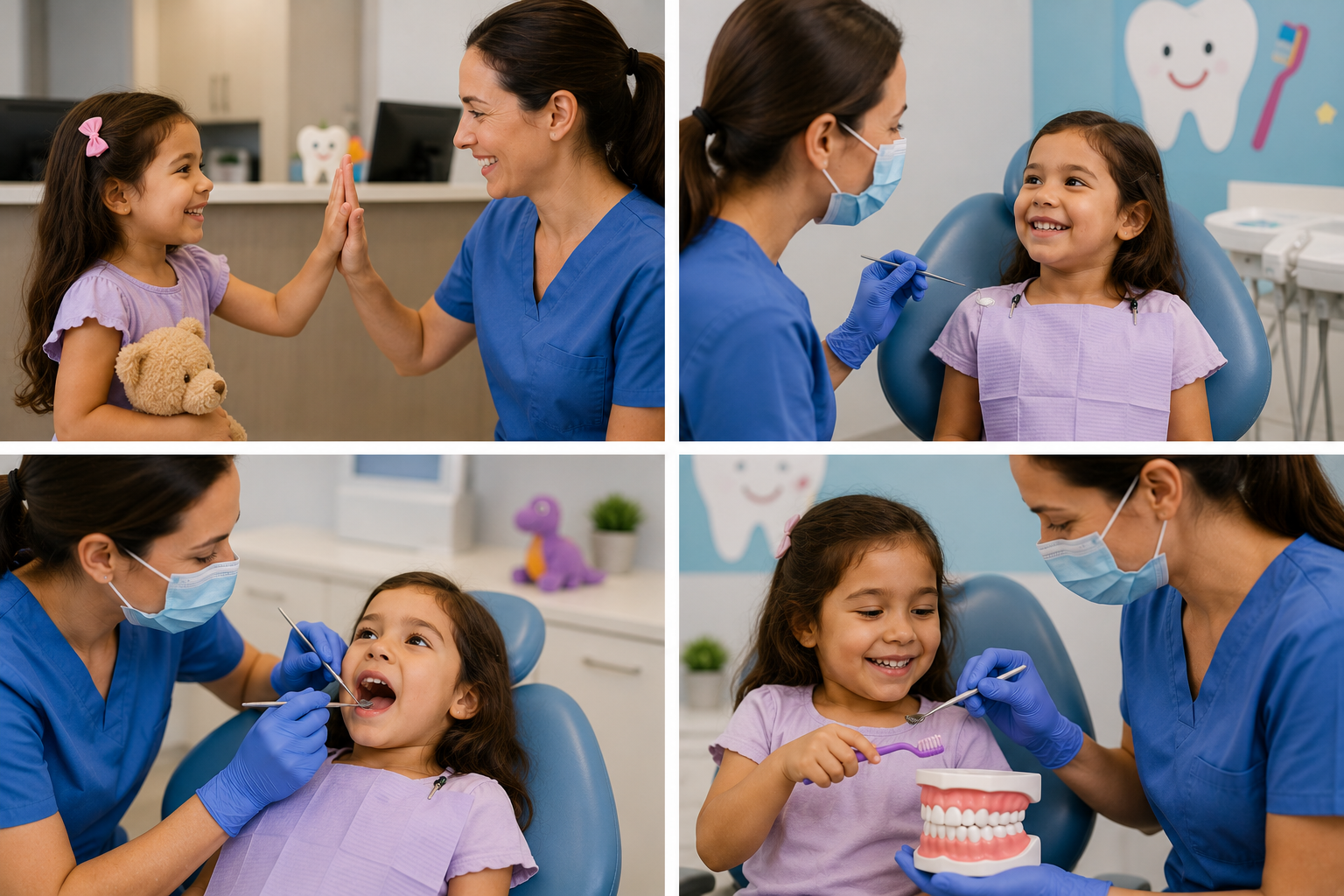
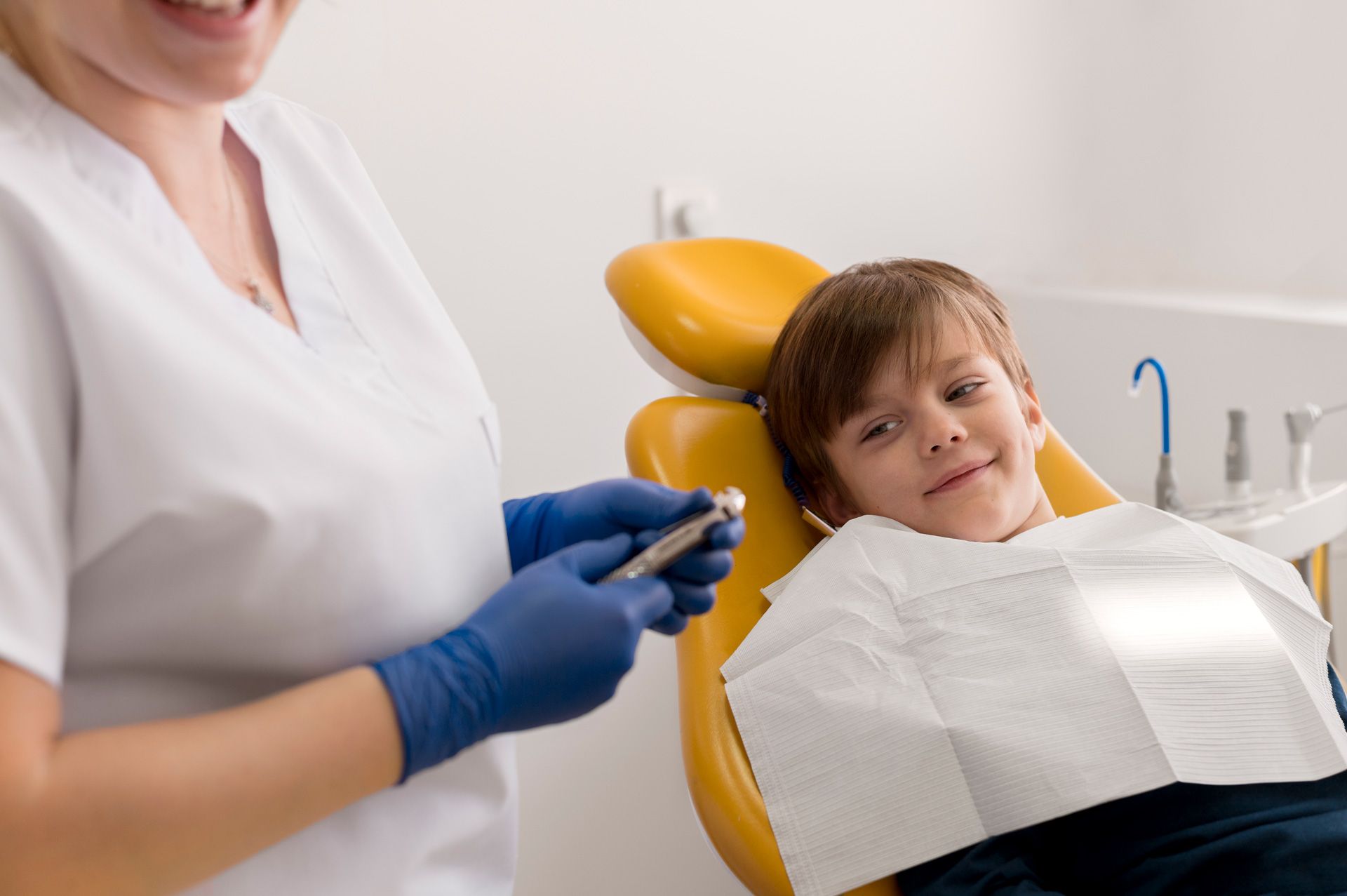
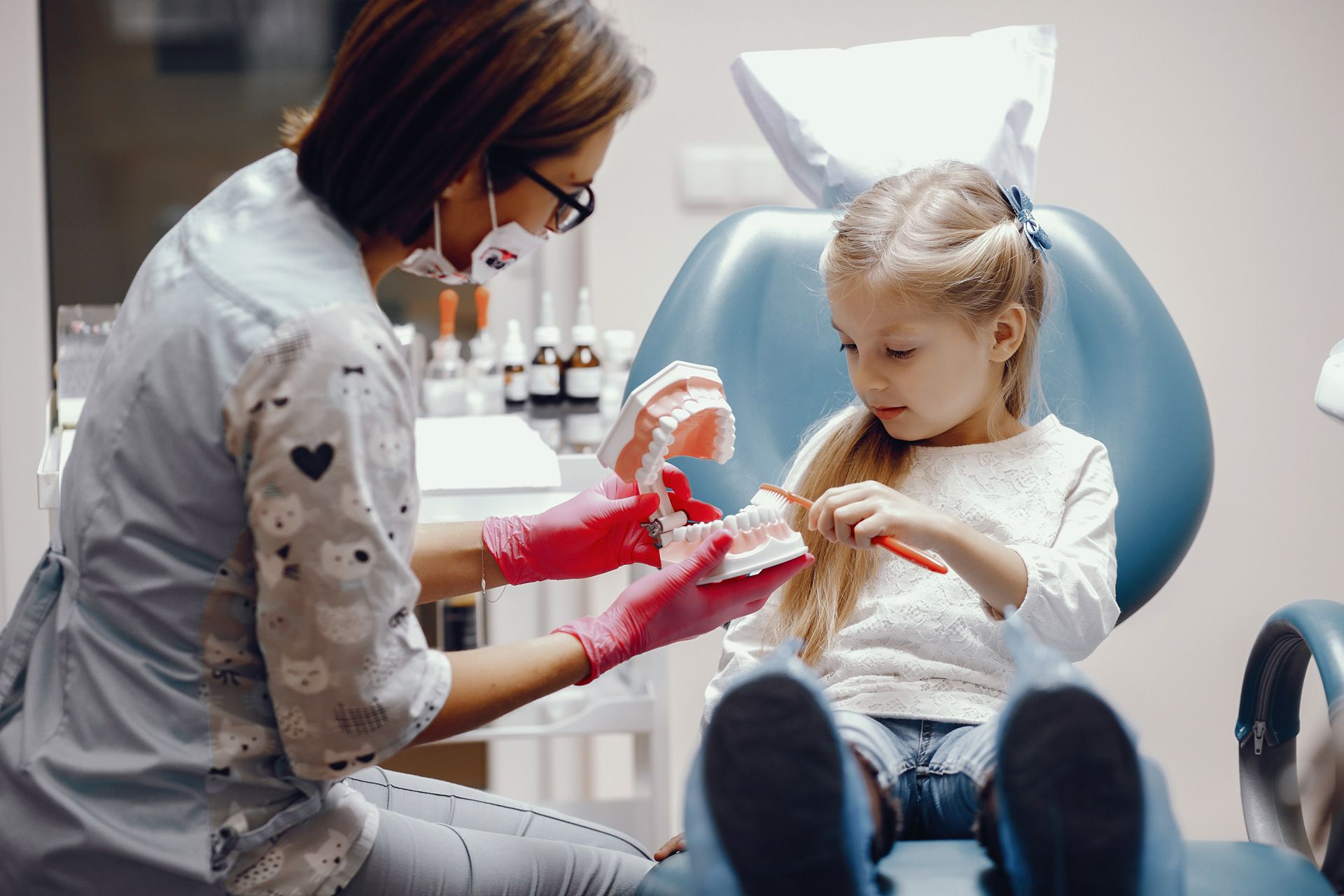
The dental team introduces themselves to both the parent and the child using friendly, age-appropriate language. They show the child the tools they will use before touching anything, narrating as they go. This show-and-tell approach is a core behavior management technique that helps children understand what is about to happen rather than being surprised by it.
Step 2: Parent Questionnaire Review
The dentist or assistant reviews the health history form with the parent, asking follow-up questions about diet, feeding habits, pacifier or thumb use, fluoride exposure, and any specific concerns the parent has noticed. This conversation shapes how the dentist approaches the rest of the visit.
Step 3: Oral Examination
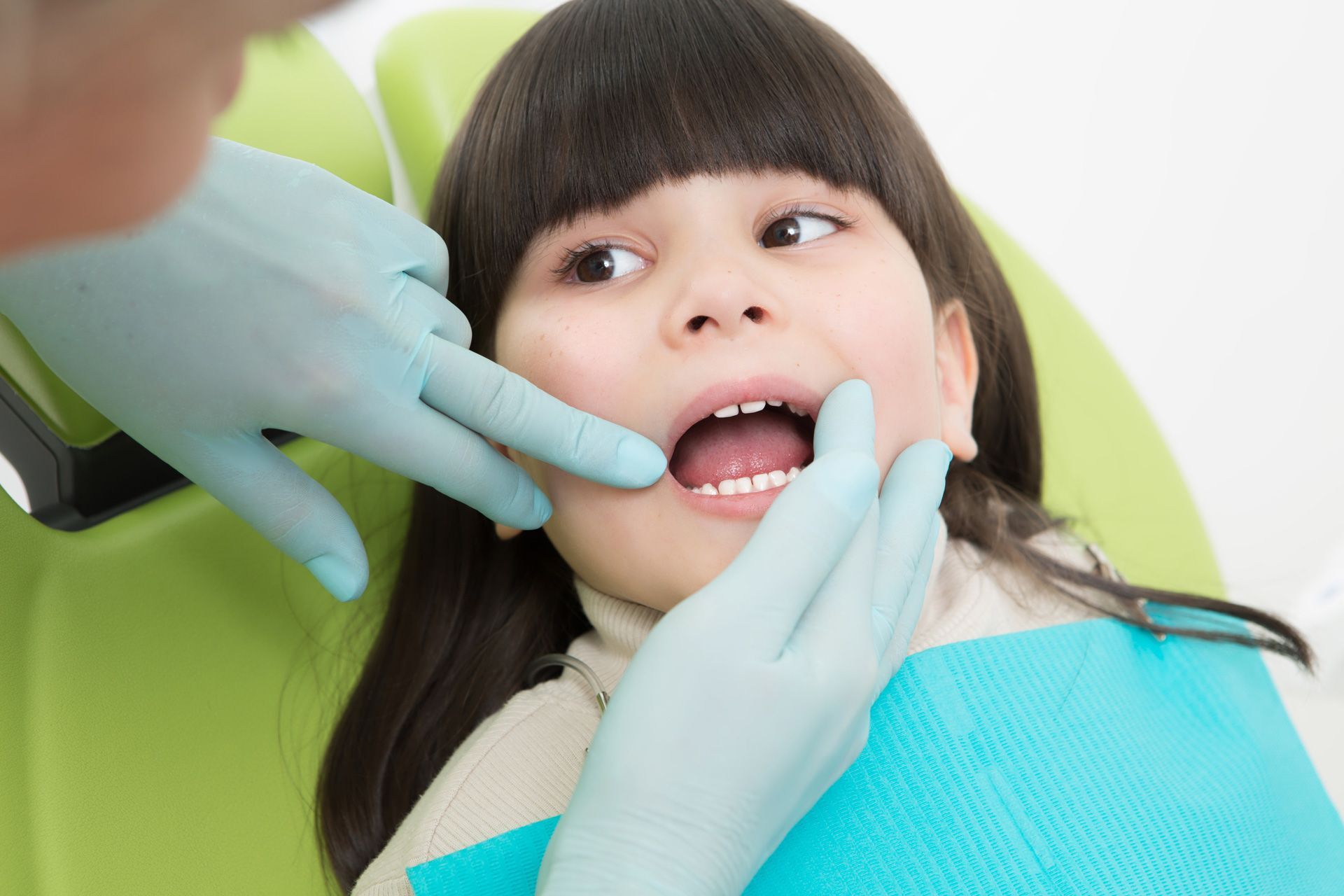
The dentist examines the teeth, gums, jaw, and soft tissues. For very young children or infants, this is often done in a knee-to-knee position with the parent and dentist seated facing each other and the child lying back across both laps. The examination is brief, gentle, and complete.
Step 4: X-Rays If Appropriate
X-rays are not automatically taken at a first visit, particularly for toddlers. When teeth are close enough together that decay between them cannot be seen visually, bite-wing X-rays may be recommended. For infants and very young children, X-rays are typically deferred until the child can cooperate with the process.
Step 5: Cleaning
Depending on the child's age, number of teeth, and level of cooperation, a brief cleaning may be performed using a soft brush or rubber prophy cup with a mild toothpaste. This introduces the sensation of a professional cleaning in a non-threatening way.
Step 6: Preventive Treatment
A fluoride varnish or hydroxyapatite treatment may be applied to the teeth to strengthen enamel. The application takes only a few seconds and is well tolerated by most children.
Step 7: Parent Education
Before the appointment wraps up, the dentist or hygienist reviews age-appropriate brushing technique, discusses dietary habits that affect cavity risk, and answers any questions the parent has. In Lehi, Utah, this conversation is treated as one of the most important parts of the visit, because what happens at home between appointments has a greater effect on a child's dental health than what happens in the office.
Building a Positive Association in Lehi, Utah
One of the most lasting outcomes of a well-run first dental visit is the association the child forms with dental care. Children who have calm, uneventful first visits are significantly more likely to be cooperative at future appointments, which makes every subsequent visit more efficient and less stressful for everyone.
Pediatric dental teams in Lehi, Utah use specific communication techniques to make this happen: simple language, demonstrating before doing, pacing the appointment to the child's comfort level, and giving children small amounts of control where possible. Parents help by staying relaxed, using positive framing when talking about the dentist at home, and avoiding words like pain or shot in the days before the visit.
What Happens After the Appointment
Once the visit is complete, the dental team shares their findings and recommends next steps. Here is what typically follows before the family leaves the office.
- A recall interval is recommended — most healthy children are seen every six months, though higher-risk children may be scheduled more frequently
- Any concerns identified during the exam are discussed with the parent, including what to monitor and when to follow up
- A summary of home care recommendations is reviewed, including brushing technique, fluoride, and diet
- The child receives a small reward such as a sticker or prize from the prize box, a positive reinforcement tradition that gives children something to look forward to at the next visit
- Future appointments are scheduled before the family leaves so preventive care stays on track
Families leaving their first visit at a pediatric dental office in Lehi, Utah typically feel more informed, less anxious, and clearer on what to do at home than they did walking in.